If Nolan's Odyssey Feels Inauthentic, These Alternatives Deliver the Real Journey
Muhammad Kumar |Jul 29, 2026
If Nolan's version left you cold, start with L'Odissea for the fullest experience or The Return for intimate power.
- Christopher Nolan's Woke Odyssey: Hollywood's Disgraceful Betrayal of Homer and Another...
- TENET Movie Download: Watch The Latest Mind-Bending Hit Of Christopher Nolan For Free
- Download "Inception" Movie For Free And Enjoy The Greatest Film Of The Decade
Christopher Nolan's 2026 The Odyssey arrives as a massive IMAX event, complete with Matt Damon as Odysseus, a sprawling cast, and sweeping set pieces filmed on 70mm. It has drawn crowds and praise for its scale and technical ambition. Yet some classicists and viewers have pointed out its shortcomings: a sense that the psychological weight, ethical tensions, and textured humanity of Homer's poem get flattened under the demands of blockbuster pacing and spectacle. Emily Wilson and others have noted a lack of deeper moral and emotional resonance. If the film left you craving something closer to the source, or simply more satisfying in spirit, several earlier adaptations offer stronger alternatives.
Here are some of the best options, ranging from near-literal fidelity to inventive reinterpretations that still honor the epic's core.
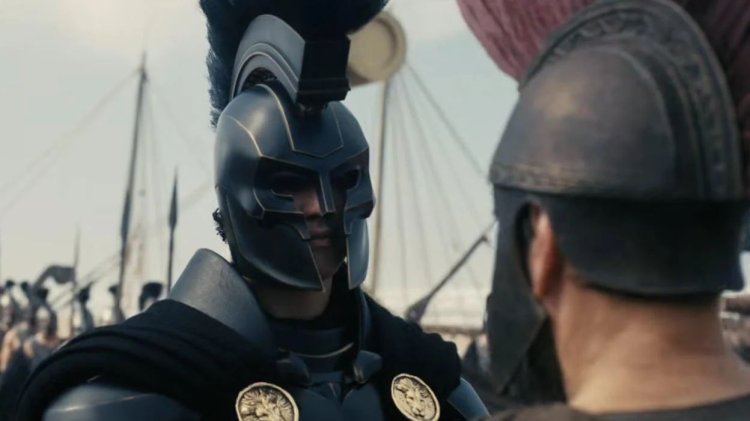
L'Odissea (1968)
This Italian miniseries directed by Franco Rossi (with contributions from Mario Bava) stands as the most textually faithful screen version of Homer's poem. Running nearly nine hours across eight episodes, it has the space to follow Odysseus's wanderings, the suitors' pressure on Ithaca, and the final reckoning without aggressive compression. Bekim Fehmiu plays Odysseus with quiet intensity, while Irene Papas brings gravitas as Penelope. The production researched period details and preserves much of the poem's structure and tone, including atmospheric sequences that feel rooted in an ancient world rather than modern action cinema. Episodes open with readings from the original verse, reinforcing the literary foundation. It is widely regarded by mythology enthusiasts as the closest major adaptation to Homer's actual text. Available versions with English subtitles make it accessible today.
The Odyssey (1997)
Andrei Konchalovsky's two-part NBC miniseries, starring Armand Assante as Odysseus, remains one of the more complete and straightforward retellings. It covers the major episodes (the Cyclops, Circe, the underworld, the sirens, the homecoming) with reasonable fidelity while streamlining for television. Assante delivers a sturdy, grounded performance, supported by a strong international cast that includes Greta Scacchi as Penelope. Critics and viewers often praise it for sticking closer to the narrative beats of the poem than many theatrical versions. The production values were ambitious for 1990s TV, and the result feels like a solid, respectful epic rather than a vehicle for star power or pure visual excess. At roughly three hours total, it is easier to digest than the 1968 series yet still far more comprehensive than most feature films.
The Return (2024)
Uberto Pasolini's film deliberately limits itself to the final stretch of the story: Odysseus's arrival back on Ithaca and the reclaiming of his household. Ralph Fiennes plays a weathered, traumatized Odysseus, and Juliette Binoche is excellent as a wary, resourceful Penelope. By stripping away most of the supernatural adventures, the movie focuses on human cost, delayed recognition, quiet tension, and the violence of restoration. Shot on location in Greece and Italy, it prioritizes atmosphere, performance, and emotional realism over spectacle. Some viewers miss the monsters and gods, yet many find its restraint and psychological focus more affecting and closer in spirit to the poem's later books than larger productions. It offers a sober counterpoint to blockbuster energy.
Ulysses (1954)
Mario Camerini's Italian production starring Kirk Douglas as Ulysses (the Latin form of Odysseus) is a classic mid-century adventure film. It condenses the epic into roughly 100 minutes and leans into heroic action, romance, and visual flair typical of the era. Douglas brings physical presence and charisma to the role, while Silvana Mangano plays both Penelope and Circe. The film includes memorable sequences with the Cyclops and other trials, though it simplifies the plot and dialogue. It lacks the depth of later versions, yet it captures a sense of mythic scale and old-fashioned entertainment that many still enjoy. For those who want a straightforward, colorful cinematic Odyssey without modern self-consciousness, this remains a lively choice.
O Brother, Where Art Thou? (2000)
The Coen brothers' Depression-era comedy is the loosest adaptation on this list, transplanting the story to 1930s Mississippi with George Clooney as a smooth-talking Ulysses Everett McGill. It freely rearranges characters and episodes (a blind prophet, a Cyclops-like figure, sirens as seductive singers) while keeping the picaresque structure, themes of homecoming, cunning, and fate. The result is funny, musical, and surprisingly resonant. Though it makes no claim to historical or textual authenticity, it captures the spirit of wandering, clever survival, and eventual reunion better than many more literal efforts. The soundtrack alone makes it worth revisiting.
Each of these works approaches Homer differently. The 1968 series and 1997 miniseries prioritize narrative completeness and relative fidelity. The Return digs into the emotional and psychological aftermath. The 1954 Ulysses delivers classic adventure. The Coens supply wit and modern energy. Together they demonstrate that the Odyssey has always thrived in multiple forms, some quieter and more patient than a three-hour IMAX event.
If Nolan's version left you cold, start with L'Odissea for the fullest experience or The Return for intimate power. The poem has endured for millennia precisely because new storytellers keep finding fresh ways to bring Odysseus home.
- Tag

Comments
Sort by Newest | Popular